

ESG Snapshot: Issue 154

1ESG Snapshot is delivered by the Business Council for Sustainable Development Australia to 900+ sustainability & ESG professionals every week.
We analyse hundreds of articles, data, insights and resources from the most reliable international and national sources, filter & distil their importance, to deliver them to you in bite-sized intelligence.
Three Key Takeaways
- The energy transition faces a delivery test. Clean-energy investment advanced, but grid constraints, project costs and infrastructure readiness remained significant challenges.
- Nature commitments face closer scrutiny. Global biodiversity negotiations and emerging disclosure expectations increased attention on turning ambition into demonstrable progress.
- Business accountability is sharpening. Developments in environmental claims, workforce practices and resource recovery reinforced expectations for greater transparency and credible action.
More detail for Members in The Week That Was
If you find ESG Snapshot useful, BCSD Australia membership can extend ongoing intelligence and relevant opportunities across your organisation. But membership value goes beyond receiving information — it depends on what your people are trying to achieve.
Our new Membership Enquiry invites you to tell us what your organisation wants to improve over the next 12 months, where progress is difficult, and which types of support would help most.
Choose up to three priorities — whether that's understanding policy developments, benchmarking performance, strengthening reporting, building a business case, improving supply-chain data or exploring practical collaboration.
We'll review your enquiry and discuss with you which BCSDA services and membership pathway could genuinely be useful. An enquiry is not a membership application or commitment.

NSW Net Zero Planning Grant — Explore your planning options
The NSW Government’s Net Zero Planning Grant Round 2 offers eligible NSW businesses up to $25,000, covering up to 50% of eligible planning costs. Energy expenditure thresholds and other eligibility restrictions apply.
BCSDA Member Carbon Reduction Institute (CRI) offers net-zero planning and emissions management services, including decarbonisation plans, carbon inventories and auditing, and supplier emissions support.
Note: Auditing, verification and validation fees are not eligible for funding under this grant. Eligibility of other proposed activities and costs remains subject to NSW Government assessment.
Businesses interested in exploring potential planning support can contact Rob Cawthorne directly at robc@noco2.com.au.
Applications close 30 November 2026 at 5 pm AEDT, or earlier if funding is exhausted.
Commercial Member promotion supplied by CRI. Publication does not constitute BCSDA endorsement of CRI’s services or methodology. Eligibility of applicants, activities and costs is determined by the NSW Government; no CRI service has been pre-approved for funding.
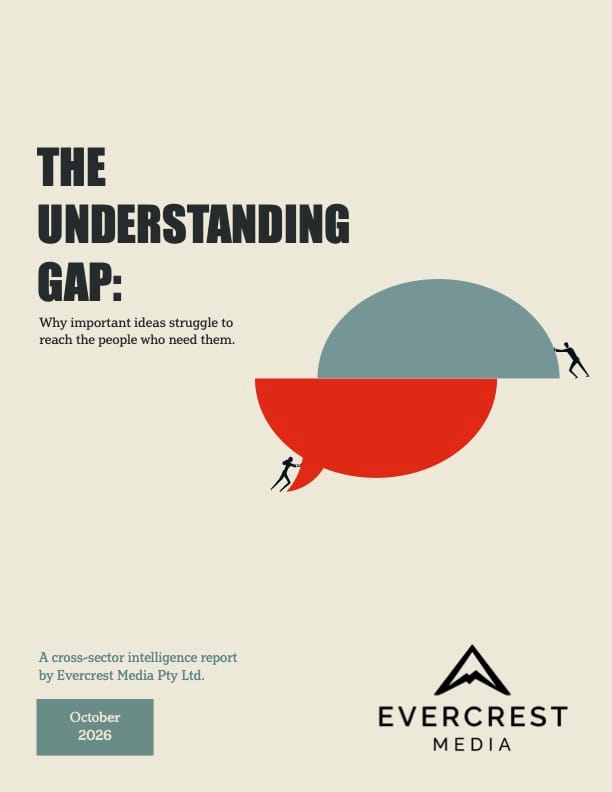
BCSD Australia member Evercrest Media has published The Understanding Gap, drawing on perspectives from 17 leaders across Australia and New Zealand on why important ideas do not always create genuine understanding.
The report highlights audience-specific communication, trust, evidence and the challenges of turning interest into action.
BCSD Australia CEO Andrew Petersen contributed a sustainable business perspective, emphasising the importance of linking sustainability to commercial decisions and demonstrating consistency between corporate commitments, investments and results.
Business takeaway: Reaching stakeholders is important, but understanding whether the message is relevant, credible and actionable is equally important.
Congratulations to Rose Mary Petrass and the Evercrest Media team.

Our Featured Events bring together selected BCSD Australia, Member, Network and priority partner opportunities with the strongest relevance to the weeks ahead.
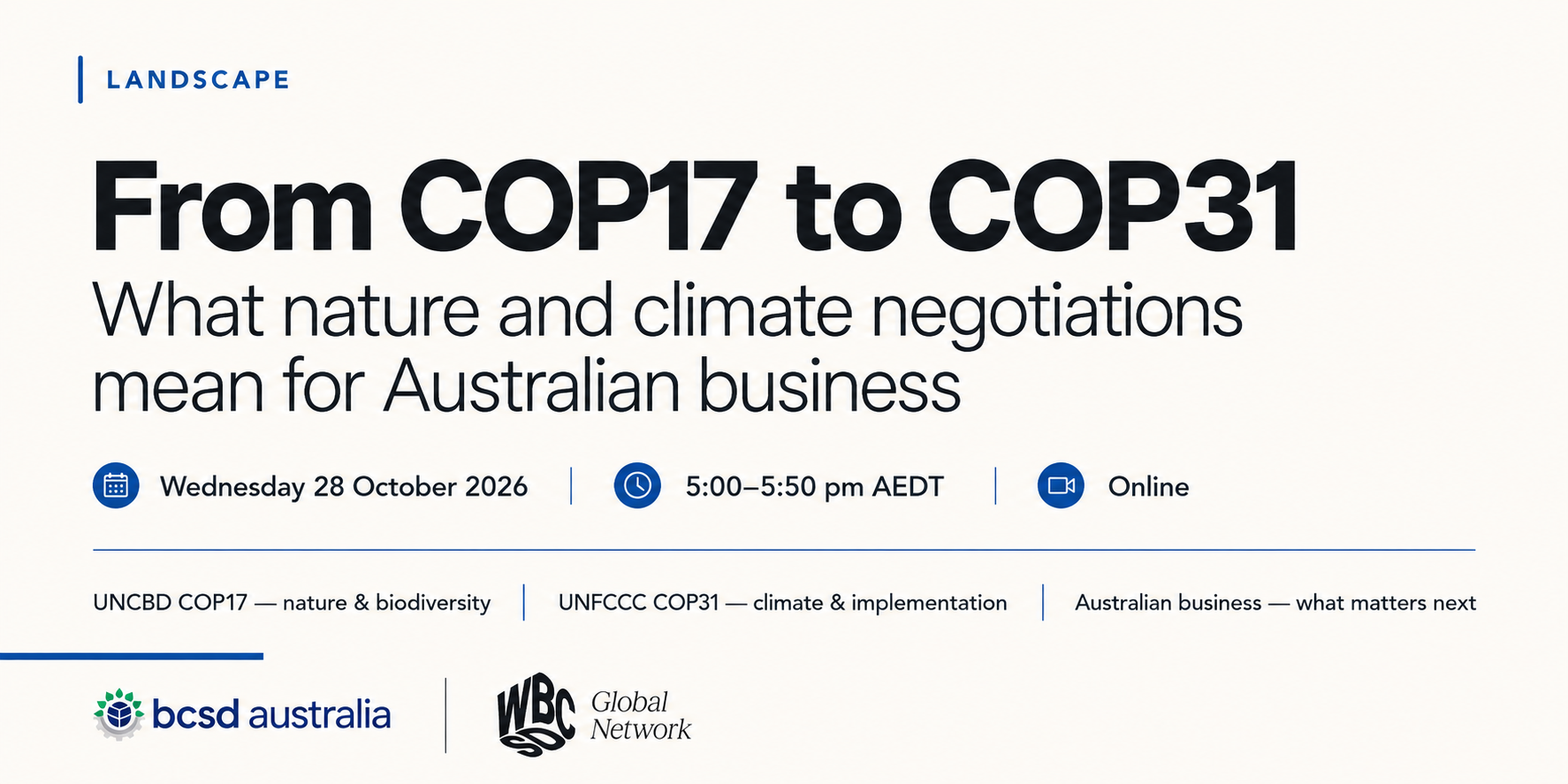
Coming up are practical sessions spanning climate disclosure, nature, human rights, circularity and COP31 preparation — including BCSD Australia’s LANDSCAPE, AASB S2 implementation workshops, thinkstep-anz materiality insights and major international policy moments.
Use this section to identify where participation, learning or connection could add value to your organisation.
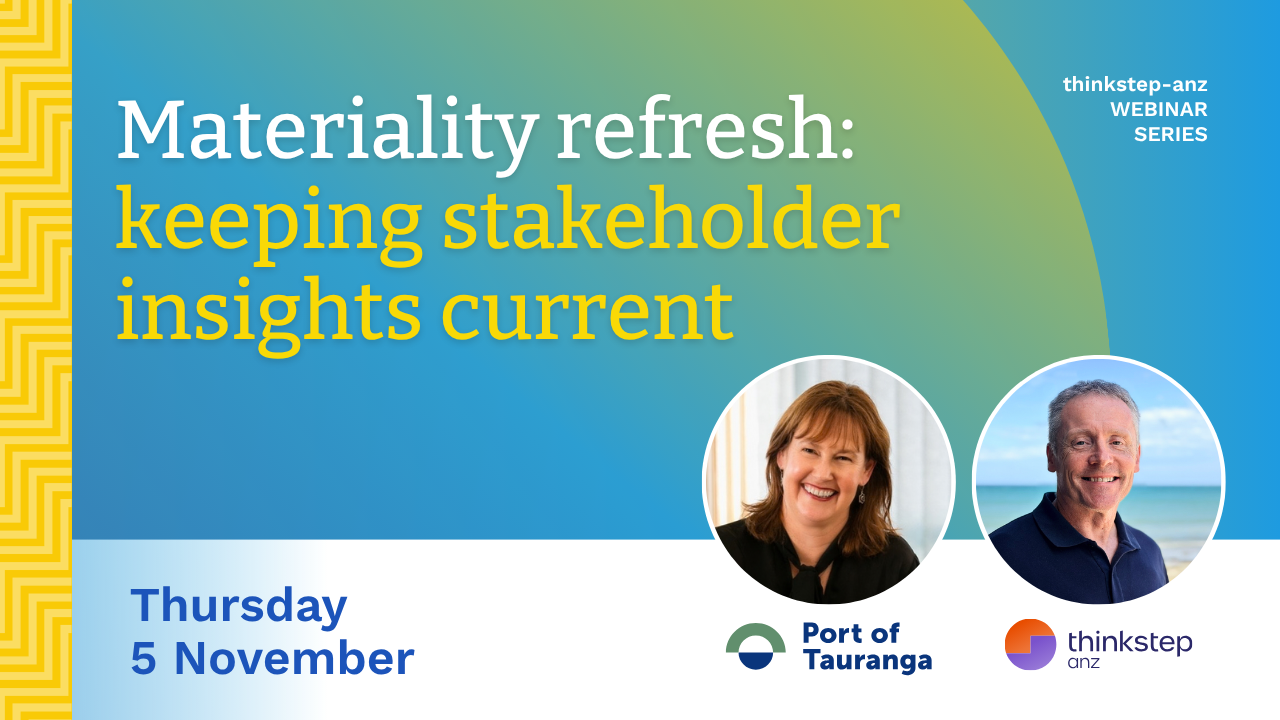
A materiality assessment should be more than a one-off exercise for a sustainability report. As stakeholder expectations, business conditions and sustainability priorities evolve, organisations need to keep their understanding of material issues current.
Join thinkstep-anz and Port of Tauranga for a practical webinar exploring how to refresh stakeholder insights, test existing material topics, engage leadership and use materiality findings to inform strategy and reporting.
Speakers: Rochelle Lockley, GM Communications, Port of Tauranga, and Martin Fryer, Head of Strategy & Disclosures, thinkstep-anz.
Relevant for: Sustainability, reporting, risk and environmental managers.

Australia uses sanctions to support international peace and security (SDG16), restricting certain activities and dealings involving designated countries, individuals and organisations. While sanctions are often associated with exports and international trade, they can also affect financial transactions, investments, supply chains and commercial relationships within Australia.
For Australian businesses, understanding these obligations is increasingly important when dealing with international partners, complex supply chains and third-party intermediaries.
Why it matters for business I Australian sanctions laws can prohibit making money or other assets available, directly or indirectly, to designated individuals or organisations, or dealing with assets they own or control. These obligations can be relevant beyond the export sector, including to financial institutions, infrastructure and construction businesses, professional services firms, importers and organisations with overseas suppliers or partners.
What's changing? The Department of Foreign Affairs and Trade (DFAT) is considering reforms to Australia's sanctions legislation. The consultation closed on 16 October 2026, but existing obligations remain in force while the proposed reforms are considered. At an Australian Sanctions Office briefing attended by BCSD Australia on 21 October, DFAT highlighted the importance of understanding counterparties, beneficial ownership and indirect transactions.
What businesses can do I Review sanctions-screening and due diligence processes across customers, suppliers, contractors, intermediaries and overseas partners. DFAT's Consolidated List, Sanctions Compliance Toolkit and Risk Assessment Tool provide practical guidance.
BCSD Australia thanks Jayme, BCSDAi intern, for attending the Australian Sanctions Office briefing and preparing the insights that helped inform this update for Members.
Further information: Australian sanctions | Proposed legislative reforms | Compliance Toolkit

We Mean Business Coalition is inviting companies to join more than 100 existing signatories to Seizing the Electric Advantage, a global business statement calling for faster clean electrification and policy certainty across electricity markets, grids, permitting and national electrification planning.
Companies that want to be included when the statement is relaunched at the opening of COP31 should sign by 2 November, 5:00 pm ET (3 November, 9:00 am AEDT).

Australia's High Seas Biodiversity Treaty obligations commenced on 23 October 2026, marking an important step in the conservation and sustainable use of marine biodiversity beyond national jurisdiction.
The new framework covers marine protected areas and other area-based management tools, environmental impact assessments, marine genetic resources, and international scientific cooperation.
Why it matters for business: Australia's implementation legislation introduces requirements relevant to certain activities affecting biodiversity beyond national jurisdiction. Businesses with potentially affected operations should assess the new framework and monitor forthcoming implementation guidance.
BCSD Australia welcomes this milestone. In 2024, we contributed to the parliamentary treaty inquiry through a written submission and evidence at a public hearing.