

ESG Snapshot: Issue 118

This week's highlights include:
- Australia backs fossil transition. Australia is one of 24 countries that has signed a Belém declaration for a transition away from fossil fuels.
- Prosecute 3M 'as soon as possible'. A Senate PFAS inquiry chaired by Senator Lidia Thorpe says 3M should be prosecuted, but Labor has dissented.
- Offshore decommissioning. The federal government will amend financial assurance arrangements for the decommissioning of oil, gas, and carbon capture projects.
- Coal mine expansion. The Queensland government has released details of Yancoal's plans for a major coal mine extension.
- Queensland environment Bill. A Bill before the Queensland parliament would 'reduce regulatory burden', the state government says.
- Two NSW bills. The NSW Parliament has passed an energy Bill and will shortly debate a just transition Bill for coal regions.
- REZ orders. Victoria has released six draft Renewable Energy Zone orders.
- More biomethane support. A new NSW renewable fuels strategy says a certificate scheme for green hydrogen will be expanded to include biomethane.
- Four batteries. Environmental impact statements for four NSW battery energy storage system projects have gone on exhibition on the same day.
- Exxon update. ExxonMobil has provided an update to a Victorian inquiry on its decommissioning activities for offshore oil and gas.
- New waste strategy. Western Australia has released a draft waste strategy and proposed new waste targets.
ESG Snapshot - powered by the Business Council for Sustainable Development Australia and curated by ESG communications and content consultancy Earthed.

Australia is one of 24 countries that has signed the Belem Declaration on the Transition Away from Fossil Fuels.
The non-binding declaration notes IPCC findings that fossil fuels are the main drivers of greenhouse gas emissions, and it welcomes the International Court of Justice advisory opinion on the climate change obligations of nations.
The declaration also welcomes a conference next April in Colombia (a fossil fuel producer) that will be co-convened with the Netherlands, and which will focus on a just transition away from fossil fuels.
Other signatories to the Belém Declaration on fossil fuels are Austria, Belgium, Cambodia, Chile, Colombia, Costa Rica, Denmark, Fiji, Finland, Ireland, Jamaica, Kenya, Luxembourg, Marshall Islands, Mexico (a fossil fuel producer), Micronesia, Nepal, Netherlands, Panama, Spain, Slovenia, Vanuatu and Tuvalu.
A Senate committee inquiring into PFAS has issued its final report.
Instigated and chaired by Senator Lidia Thorpe, the main report recommends that the federal government launch "litigation against 3M and any other relevant chemical company as soon as possible, seeking restitution on behalf of the Australian people for the misleading and deceptive conduct of these companies, breaching their duty of care, and causing damage to communities, culture, heritage, food sources, lifestyles, and the environment".
In a dissenting report, Labor senators said they were "cautious about recommending prescriptive policy interventions that may not be supported by evidence ... or may have unintended and undesirable consequences".
Consultation opportunity - decommissioning offshore oil and gas and CCS projects. The federal government is seeking feedback on proposed reforms to decommissioning and financial assurance arrangements for the offshore oil and gas industry.
The changes aim to prevent companies postponing decommissioning or underestimating decommissioning costs. It also aims to require the preparation of public decommissioning plans.
Comments are due by 13 January.
A key Productivity Commission report has been with the government for three months, and is still awaiting public release.
The Commission's report on the circular economy was submitted to the government on 22 August.
Meanwhile, the Commission's final net zero report is due to be submitted to the government next month.
Consultation opportunity - ACCU register. The Clean Energy Regulator has released a discussion paper on proposed improvements to the ACCU projects and contracts register.
Comments are due by 19 December.
Meanwhile, the government has gazetted the Carbon Credits (Carbon Farming Initiative) Amendment (Identity Evidence) Rule 2025, which streamlines identification requirements for applicants who have had their identity previously verified by the Regulator.
The Net Zero Economy Authority has gazetted a Yallourn Power Station Trigger Notice and Geographic Area Instrument.
Trigger notice and geographic area instruments are the first steps towards the Authority deciding whether to establish an Energy Industry Jobs Plan, which is a legislative framework that ensures the owner of a closing power station gives its employees support and advice.
EnergyAustralia's Yallourn power station is due to close in mid-2028.
A coalition of unions, environment and industry groups has called on the federal and NSW governments to deliver a long-term, structural solution using renewable energy "to secure the future of Tomago Aluminium".
"It is essential that state and federal governments play a strong, proactive role in delivering cheap renewable energy to industry," the statement says.
"Governments should use every tool at their disposal — including their balance sheet — to drive rapid investment in transmission, storage and generation," it says.
ARENA has awarded a $7.86 million grant to Li-S Energy Ltd to advance its planning for a proposed lithium-sulfur battery cell manufacturing facility.
The proposed facility aims to produce up to 1GWh per year of battery cell capacity – 500 times the capacity of Li-S Energy's current Geelong-based facility.
Lithium-sulfur batteries have the potential to deliver up to twice the energy density of conventional lithium-ion batteries, enabling longer range and lighter weight for electric vehicles, drones, and other applications.
The CEFC has provided $50 million in discount finance to Scape Australia, which is one of Australia's largest providers of student accommodation.
The finance will be used to accelerate electrification across its portfolio of 17,000 beds in purpose-built student accommodation across Sydney, Melbourne, Brisbane and Adelaide.
Reports and resources:
- WWF Australia has released a report prepared by Associate Professor Emma Aisbett of the Australian National University on navigating the global verification regime for green iron and steel.
- The Energy Insiders podcast has released an episode on roadblocks to greater investment in clean energy by superannuation funds.
- Two new reports from the Coal Transition Commission, co-chaired by France and Indonesia, show that nearly half of ASEAN's coal fleet can be retired with existing financial solutions.
- CDP has released a new report on the financial implications of deforestation.
Open consultations:
- Environmental standards. The federal government has released a draft National Environmental Standard on Matters of National Environmental Significance (MNES), and another on environmental offsets. Comments are due by 30 January. (A Norton Rose Fulbright summary of the draft standards can be found here.)
EPBC developments:
- DCCEEW has released an Equis referral for the 840MW Wanganella wind farm and 600MW/2400MWh battery system at Battery Energy Storage System (BESS) facility with an approximate capacity of up to 600MW / 2400MWh. The project would be located in NSW, between Deniliquin and Hay.
- DCCEEW has released an Alinta Energy referral for the 200MW Mount Lambie wind farm and battery system, to be located in NSW, west of Lithgow.
- DCCEEW has released the referral for the proposed 200MW Texas solar farm and battery system, proposed for a site in NSW just south of the Queensland border.
- DCCEEW has granted approval for RES's proposed 500MW Tallawang solar farm in central west NSW, near Gulgong.
Net zero or real zero? The 'Track Changes' podcast will soon be discussing these two terms, and hosts Franziska Curran and Murray Griffin want to include your views. Is one concept a misguided fantasy, and the other our best hope? Or are both concepts useful? Emailed audio clips - no more than 1 or 2 minutes - preferred. DM Franziska or Murray on LinkedIn for details.
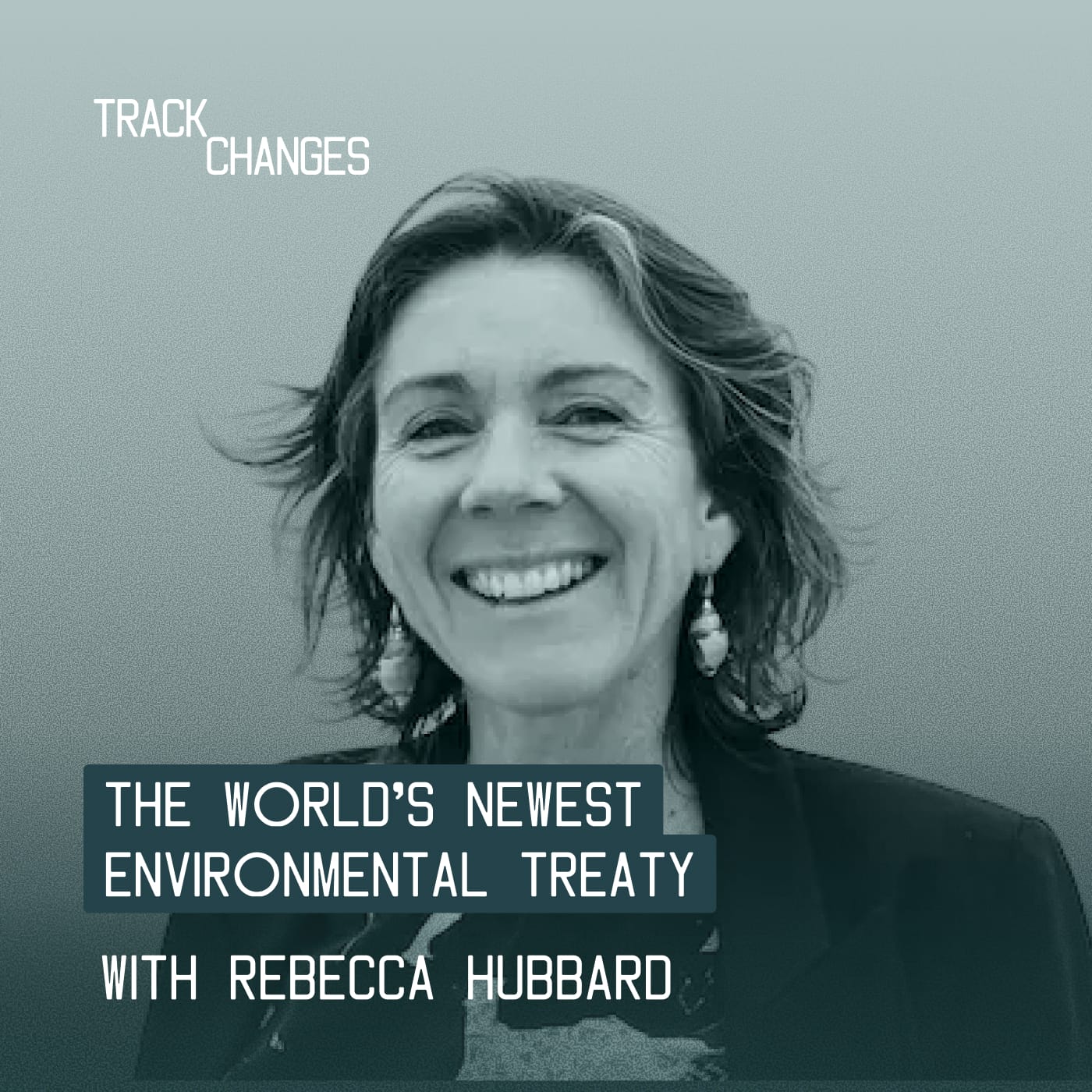
Plus, the latest Track Changes pod is an interview with High Seas Alliance director Rebecca Hubbard about the High Seas Treaty that enters into force in January. Out on Spotify, Apple and YouTube.

The Queensland government has introduced an Environmental Protection (Efficiency and Streamlining) and Other Legislation Amendment Bill.
The omnibus Bill includes provisions amending the Environmental Protection Act to "reduce regulatory burden", according to the Bill's explanatory statement.
The changes include amendments to provisions for mines to have Progressive Rehabilitation and Closure Plans.
The amendments also strengthen powers for the court to order forfeiture of property to stop an ongoing offence.
Opposition leader Steven Miles has tabled in state Parliament an Australia Institute research paper that concludes Adani sold coal for $100 per tonne through a period that saw relevant coal prices reach $280 per tonne, "resulting in apparent royalty underpayments of almost $400 million".
The Australia Institute paper notes that in August 2025 the Queensland government announced an end to legal action over royalty payments by Adani's Carmichael coal mine, which had been started by the Queensland Revenue Office in April 2023.
The QRO had alleged the mining company had not been paying sufficient royalties between July 2021 and March 2023.
"Adani's apparent attempt to underpay royalties is in line with the company's long reputation for bad behaviour in general and financial irregularities in particular," the tabled paper says.
The Queensland government has issued a notification that Yancoal is seeking environmental approval to extend operations at its Yarrabee coal mine.
The project would extend the life of mining operations at the mine until 2070, resulting in the mining of an additional 74 million tonnes of coal.
The continuation would result in an additional 289 million tonnes of greenhouse gas, including 278 million tonnes from the burning of the coal.

Statutory development - energy legislation. The NSW Parliament has passed an Energy Legislation Amendment Bill that expands eligibility for benefit‑sharing programs so that communities and landholders in local government areas and Aboriginal land council areas that are only partly within a renewable energy zone can benefit.
The Bill also streamlines the processes for approving and delivering network infrastructure projects.
In addition, it establishes a head of power to allow NSW to derogate from the National Electricity Rules to create a framework to manage system strength in renewable energy zones.
The Bill also ensures householders can't ever be charged for exporting electricity in the middle of the day, when solar generation is at its peak.
Statutory development - future jobs and investment. The NSW government has introduced a Future Jobs and Investment Bill, which would establish the Future Jobs and Investment Authority that would attract investment to coal regions to create new jobs, lead community engagement, and position workforce and supply chains to seize new opportunities.
Local divisions of the Authority will be set up in the Hunter, Central West, Illawarra and the North West, and the chairs of local divisions will be appointed to the Authority's board.
NSW has 25,000 people directly employed in the coal industry, compared to 3,000 coal workers in Victoria, and 1,100 in Western Australia.
The NSW government has released a renewable fuel strategy that outlines actions to expand the state's renewable fuel industry.
Key measures include expanding the NSW renewable fuel certificate scheme, which will currently only support green hydrogen, so that from 2028 it also supports biomethane.
The government will also allocate up to $40 million to support the development of biomethane production facilities. It will also establish a demonstration project at a state government owned facility.
In addition, it will expand renewable diesel trials, offering access to subsidised renewable diesel through a competitive grant process.
Targets for 2035 in the strategy include ensuring renewable fuels contribute 2.5% to emissions reduction in NSW's hard-to-abate sectors, ensuring 15% of industrial gas use is renewable, producing 10PJ of renewable fuel, and generating $1 billion of economic investment in NSW.
Last Thursday, the NSW government placed on exhibition the environmental impact statements for four proposed battery energy storage system projects - the 100MW/1,000MWh Griffith BESS, the 125MW/1,000MWh Stoney Creek BESS, the 100MW/400MWh Mangoplah BESS, and the 300MW/1,200MWh Willavale Park BESS.
On the same day, it also placed on exhibition the EIS for a proposed 55km pipeline connecting the Narrabri gas project to the Queensland Hunter gas pipeline.
The Net Zero Economy Authority, with non-financial support from the NSW government, has finalised a $5 million funding agreement to deliver master plans for two Hunter Valley coal mine sites - BHP's Mt Arthur site and Glencore's Macquarie Coal site.
"These master plans will pave the way for repurposing former mine sites into productive, sustainable assets, creating new opportunities for jobs, investment, and innovation across the region," the federal government said.
The work will also lead to a recommendations report to help guide future mine closures across NSW.
NSW Energy Minister Penny Sharpe has gazetted an amending Renewable Energy Zone (Central-West Orana) Order.
The NSW Legislative Assembly has debated a public interest motion on net zero.

Consultation opportunity - renewable energy zones. The Victorian government is inviting comments on draft renewable energy zone orders proposed for five onshore sites - western, central highlands, Gippsland, north west, and southwest.
It has also issued a draft order for the Gippsland shoreline zone, which is where infrastructure such as underground cables will connect offshore wind farms to the transmission network.
Each draft order includes a map of the zone, transmission projects to enable the zone, and the intended hosting capacity that the planned transmission network could accommodate.
Comments are due by 22 February.
In a submission to a Victorian parliamentary inquiry into offshore oil and gas decommissioning, ExxonMobil says the number of people working on its offshore oil and gas platforms in the past ranged between 300 and 500 staff.
But with its decommissioning activities "now in full swing", the number of staff has grown to more than 800, the oil and gas company says.
"In addition, 50-100 jobs are expected to be required to carry out the dismantling and recycling of the platforms at Barry Beach Marine Terminal, it says.
The submission says ExxonMobil's aim is that more than 95% of the mostly steel material "will be able to be recycled or reused from our oil and gas structures".
"Most recently we have awarded an execution contract to Allseas Marine Contractors, for the Pioneering Spirit heavy lift vessel (HLV) to remove the topsides and upper jacket sections of 12 platforms, commencing in 2027," it says.
Meanwhile, a submission from the Institute for Energy Economics and Financial Analysis suggests that the government ensure offshore oil and gas companies are also covered by a 'trailing liabilities' Bill before Parliament.
The Bill currently only ensures coal mine owners can't escape financial liability for decommissioning and rehabilitation.
"Climate change threatens to upend traditional planning approaches," says a new report from the Victorian Ombudsman.
"Catchments are changing, and homes built today must be designed to withstand tomorrow’s conditions," the report says. "Planning decisions should consider longer-term flood projections, where available."
"Embedding a 2100 flood planning horizon into the Victoria Planning Provisions, as is already done for coastal erosion, would assist local authorities to take necessary preventative action," it says.
"It is also important that flood models continue to be updated as our understanding of climate change improves."
Victoria's Commissioner for Environmental Sustainability has released its State of the marine and coastal environment 2024 report.
The report recommends that the state government update the Coastal Inundation Dataset that models the extent of land subject to coastal inundation due to projected sea level rise from 2009 to 2100.
The report is the first to be issued under the Marine and Coastal Act 2018.
In a speech to the Australian Energy Producers annual general meeting, Woodside chief executive Meg O'Neill said the Victorian Government "is poised to release petroleum exploration acreage for the first time in years".
Seven regional water corporations spanning almost two-thirds of Victoria have united to launch the Northern Urban Water Accord.
The accord will help them work together on region-wide water security.

Nyrstar's Port Pirie lead smelter has delivered the first successful casting of antimony metal, which the state government describes as "a major milestone for the Port Pirie smelter and for Australia’s critical mineral supply".
The result follows the announcement earlier this year by the federal, South Australian and Tasmanian governments of a joint $135 million investment to help transform Nystar's Australian smelters so they can produce critical minerals.
Nyrstar Port Pirie is expected to ramp up production and export of antimony to 2,000 tonnes annually by the end of next year. It has the potential to scale up to 5,000 tonnes by 2028, equivalent to approximately 15% of global supply and almost 100% of the US 2023 import volume.

Consultation opportunity - waste and recycling. The WA Waste Authority has released a draft waste strategy and roadmap that includes new targets for 2030.
Comments are due by 16 December.
The WA EPA has released a new referral for Northern Star Resources' Kalgoorlie regional renewable energy project.
The project would comprise a 366MW wind and solar farm, and associated battery system, which would provide more than 70% of the electricity required by Northern Star's Kalgoorlie Consolidated Gold Mine operations.
The project is the key component of the company's efforts to reduce its operational carbon emissions by 35% by 2030.
Environment Minister Matthew Swinbourn has appointed Jane Bennett as the new Deputy Chair of the WA EPA. Bennett, an EPA member since June 2024, has been appointed Deputy Chair until June 2027.
Get BCSDAi TL-DR - your three-minute brief!
Plain-English signals and actions on climate, nature, circularity, equity and accountability — in ~3 minutes, with links to primary sources. Choose your streams. Delivered to your inbox.



Rio Tinto has signed a Joint Development Agreement with Australian environmental technology company Calix to support construction of Calix's Zero Emissions Steel Technology (Zesty) demonstration plant in Kwinana, Western Australia.
The Zesty technology could enable Pilbara iron ores to be used in lower-emissions steel making.
Rio Tinto will invest more than A$35 million to assist Calix with the Zesty plant, which also has ARENA support.
The Zesty process is compatible with lower grade iron ore and uses electric heating and hydrogen reduction to produce reduced-emissions iron.

The UNFCCC has released an outline of how Turkey and Australia will jointly lead COP31.
Organisations and news services that have released analyses of COP30 include:
- an extensive analysis from Carbon Brief.
- a briefer summary by Climate Home News.
- a more technical summary by the Earth Negotiations Bulletin (due out in a few days).
- a brief summary from Edie.
The COP30 Presidency website is here, and official UNFCCC documents are here. There is also a LinkedIn post from UNFCCC executive secretary Simon Stiell, and another from president of the European Climate Foundation, Laurence Tubiana.
South Korea announced at COP30 that it has joined the Powering Past Coal Alliance (PPCA).
Out of its 61 existing coal power plants, 40 coal power plants are confirmed to phase out by 2040. The phase out date for the remaining 21 coal power plants will be determined based on economic and environmental feasibility after public discussion.
South Korea currently operates 7th largest coal fleet in the world.
The G20 leaders summit has issued a declaration that provide a strong endorsement of the Paris Agreement and a commitment to remain ambitious to keep global average temperature rise below 1.5 degrees.
BCSDA welcomes enquiries from organisations and companies interested in distributing ESG Snapshot under their own logo to their members, clients or suppliers.
Australian news items in all issues of ESG Snapshot can be searched by relevant Sustainable Development Goal category. To do this, click on the '17 SDGs' link at the top of this web page, or on any of the SDG keys below.
Click to search via SDG
















